
“Asian American and Pacific Islander Heritage Month”

***Note: I will be preaching at the stated meeting for Trinity Presbytery at First Presbyterian Church, Clinton, South Carolina, my hometown. If you are in the area, I would be happy to see you. Saturday, May 16th, 9:30am.
When Esther and I got married, we lived near her parents in California for several months before I began seminary in Pasadena, three hours south. And, we lived with them amidst packing and preparing to move.
I slowly became more proficient using chopsticks, plucking bean sprouts and sweeping sticky white rice into dried seaweed. Korean food is simply my favorite, hands down, no contest, but it takes significant time and a pinch of magic to make.
I want our son Ezra to know just how awesome Korean food, culture, and history are. I want him to be proud of his Korean heritage. It’s not something to minimize or hide. It’s a heritage to be proud of.
Visiting Korea with family several years ago was a profoundly meaningful experience. We visited my mother in-law’s hometown, and we even visited the family house and land, right outside of town.
For a significant part of one particular afternoon, we hiked up a steep mountain road and gathered gosari roots and dureup shoots on the mountainside. The roots and shoots would be part of supper that evening. We carefully followed and mimicked Esther’s aunts and uncle, how they skillfully plucked the gosari roots and dureup shoots at just the right spot on the stem, avoiding getting pricked by the thorns.
At the end of the afternoon, we visited the grave of Esther’s grandparents. After we set out items in front of the grave for the remembrance ceremony, Esther’s oldest aunt invited me to perform Jesa, which is three deep bows, prostrating on the ground, as a way of showing respect and gratitude for our ancestors. Each time I touched my forehead to the ground, I said, “Thank you,” three times. It was an honor to participate.
Learning Korean language is on my horizon. I have no excuse for not learning Korean language years ago. Esther and I have known each other for more than nineteen years, half my lifetime.
Speaking of Korean language, the world’s first moveable metal type printing press was made around 1234 in Korea, perhaps earlier, which is more than two hundred years before the Gutenberg printing press. No big deal. But if you’re taking a test in school somewhere in the U.S., you should still say the Gutenberg press was the first in 1440, even though that’s wrong.
This is one reason I revel in the rise of cultural phenomena like KPop Demon Hunters and BTS. They have brought Korean culture and history into the foreground, with BTS even integrating a Korean folksong into their opening song in their newest album.
I love celebrating and eating the food, but let’s be honest. This country has not been kind to people of Asian descent. From exclusionary immigration policies to internment camps to ongoing “othering” of people of Asian descent, this country’s history is fraught all the way up to the present day. Anti-Asian racism is rampant.
When I hear people say, “I’m colorblind,” it is simply another way of saying, “I don’t see you fully” or “I’m not going to learn more about you” or “you’re not worth getting to know,” rendering Korean identity invisible, erasing cultural gifts and traumas.
The Korean American scholar, Grace Ji-Sun Kim, wrote a book entitled Invisible. In it she writes, “Invisibility persists throughout the Asian American story. Occupying a vague social status, the Asian American has long been perceived as a deferential foreigner, an individual with economic significance who exercises their inherent diligence in academic and professional spaces but possesses little social importance.”[1]
“The invisible God the creator became a human being and became visible through the incarnation,” and Kim continues, “The visible God makes us all visible.”[2]
God doesn’t desire any of us to be invisible.
A few weeks ago, Esther, Ezra, and I attended a concert showcasing Country Gongbang, a Korean Bluegrass band at the Newberry Opera House in Newberry, South Carolina. I follow them on Instagram and was happily surprised when I saw they would be playing at a venue so close to us. They flew in from Incheon, South Korea, several days earlier. They brought their hybrid, genre-blending music and created a beautiful liminal space with us.
At the beginning of their set Kim Ye-bin, who sings lead vocals and plays mandolin, said, “This is our first time in South Carolina…we are going to do our original songs written in Korean, so listen with your heart,” and later in their set, she said, “It’s too easy to hate each other. We need kindness.”
They radiated bravery and joy throughout their set, and they closed their set with one of their original songs, “Mushroom Hunter,” a beautiful melancholy song that expresses the lonely yearning of a solitary mushroom hunter. They inspired me and reminded me of the important role for art, especially music, in processing deep emotions in a world of manifold injustices.
You don’t have to be Asian American to celebrate and give thanks for the heritage and contributions of people of Asian descent in the United States.
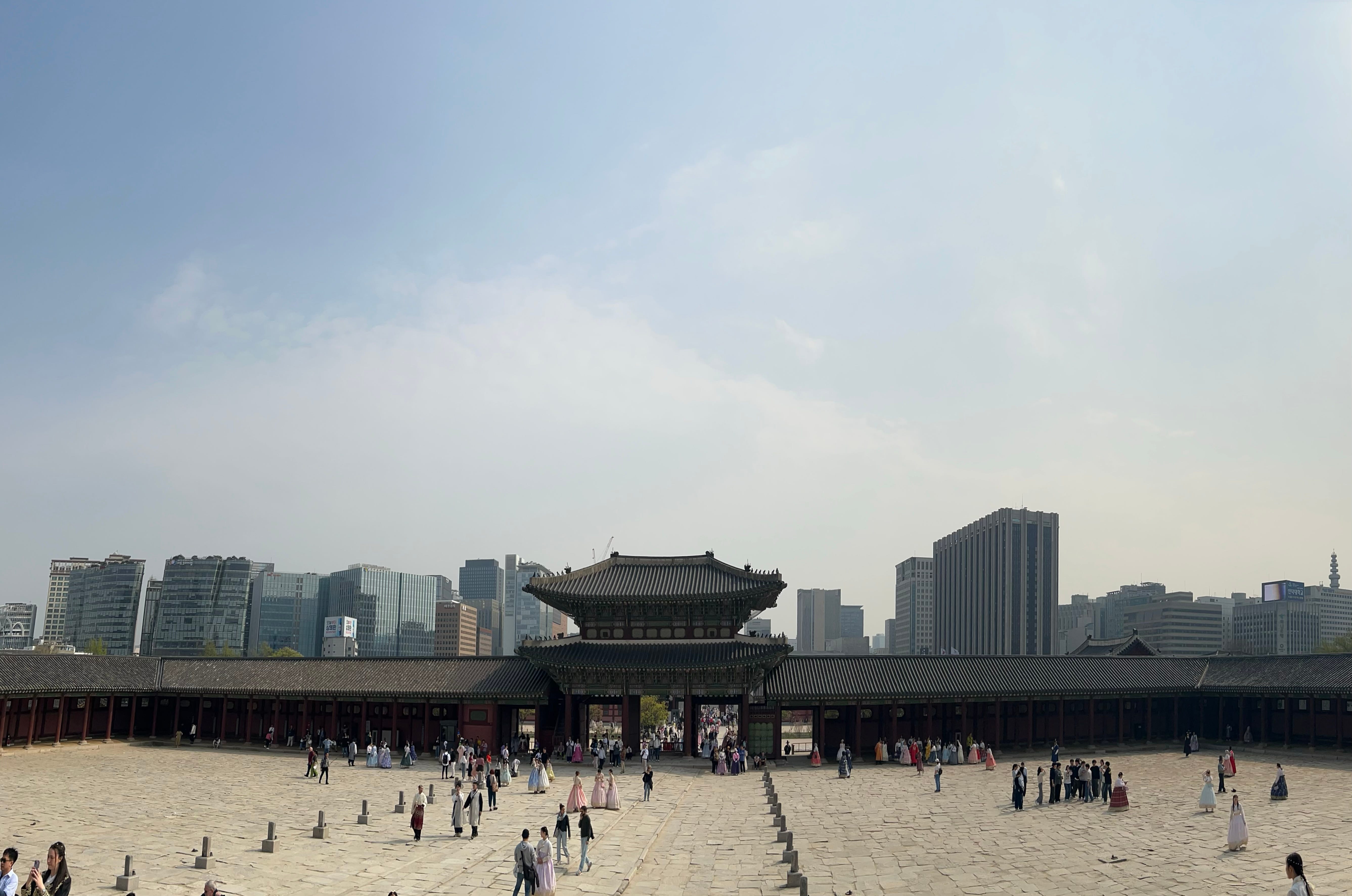
(Pictured: Gyeongbokgung Palace in Seoul, South Korea)
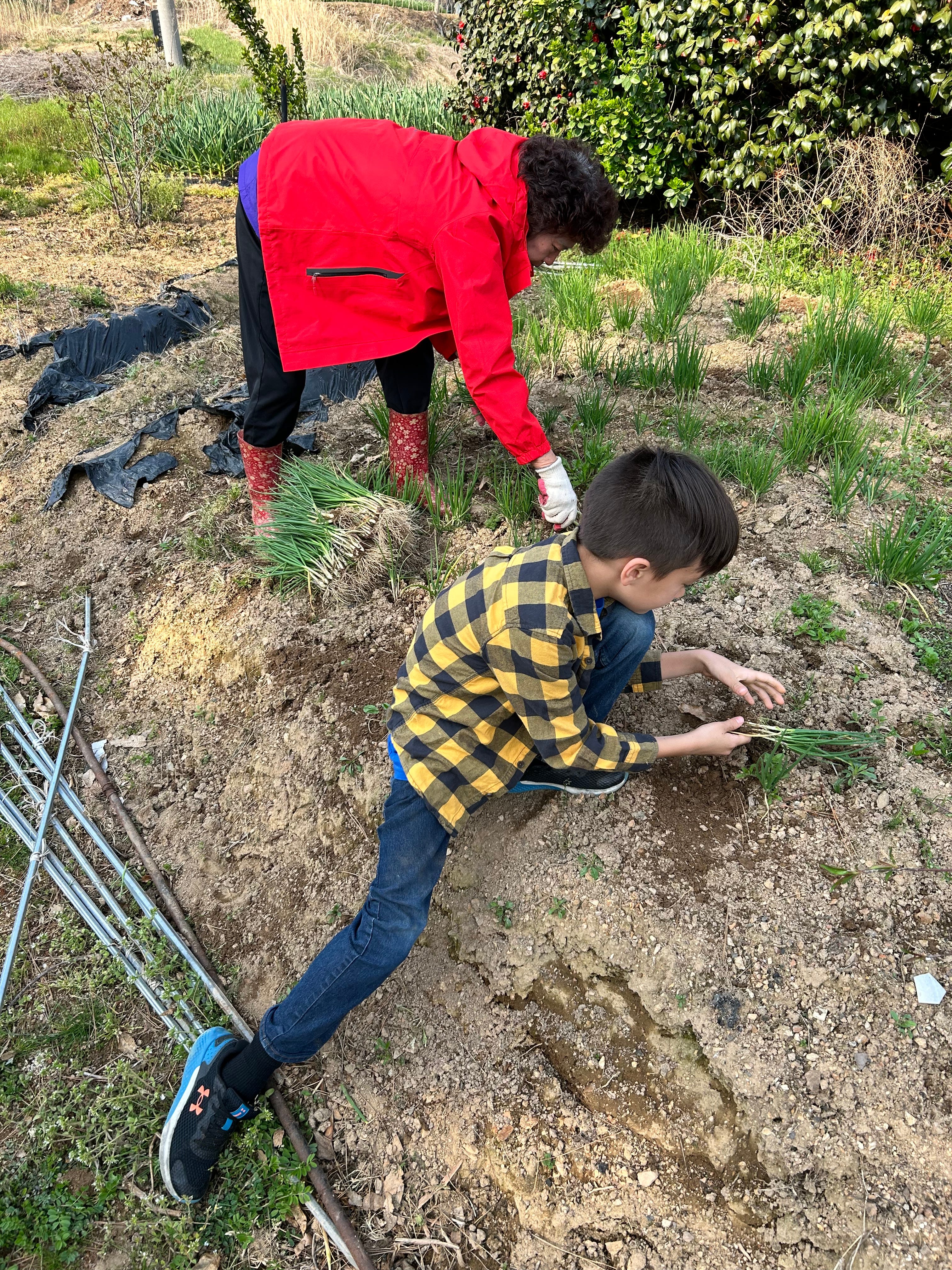
(Pictured: Ezra learning to carefully pluck green onions at his great aunt’s house, South Korea)
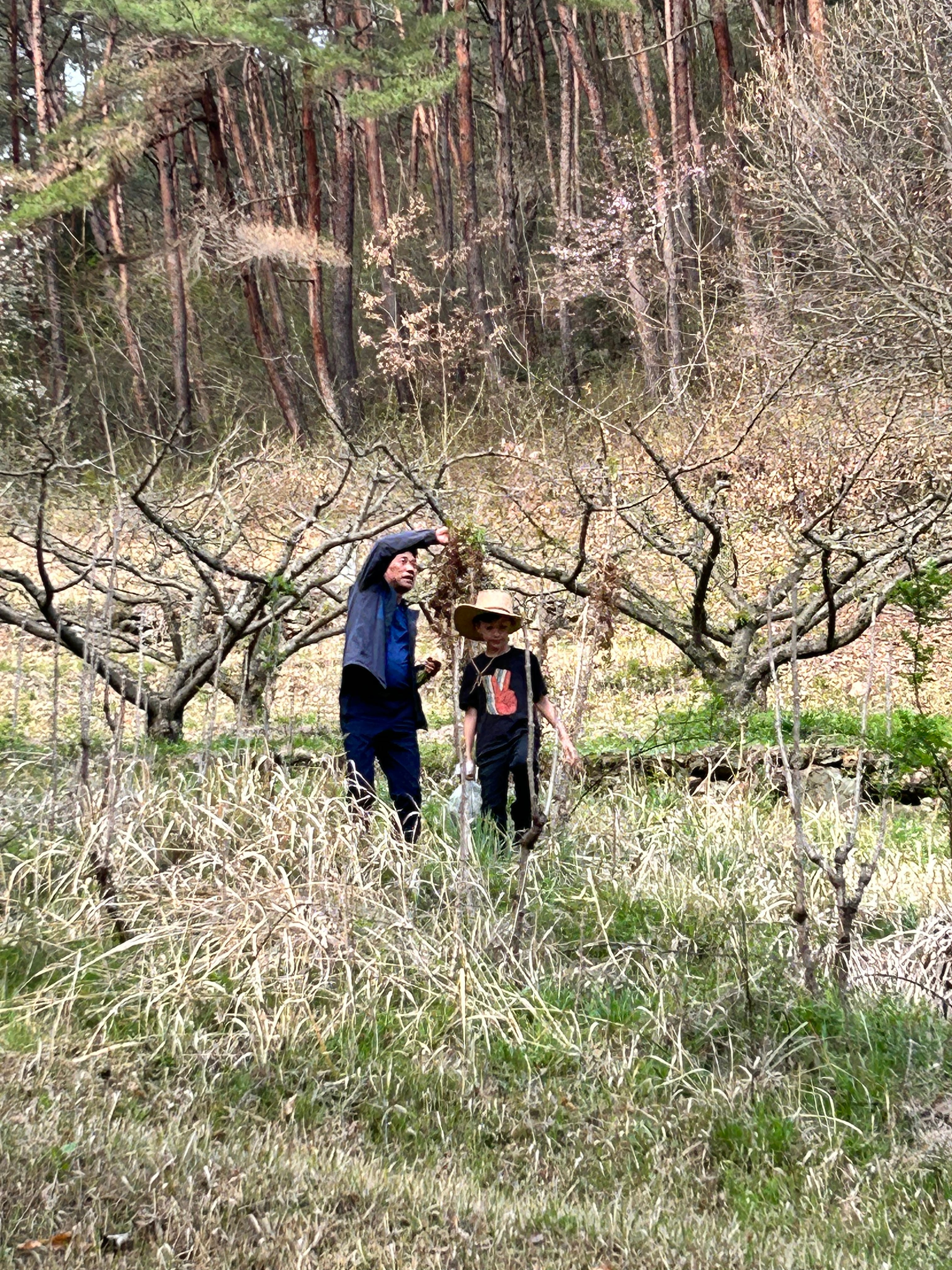
(Pictured: Ezra exploring with his great uncle, South Korea)
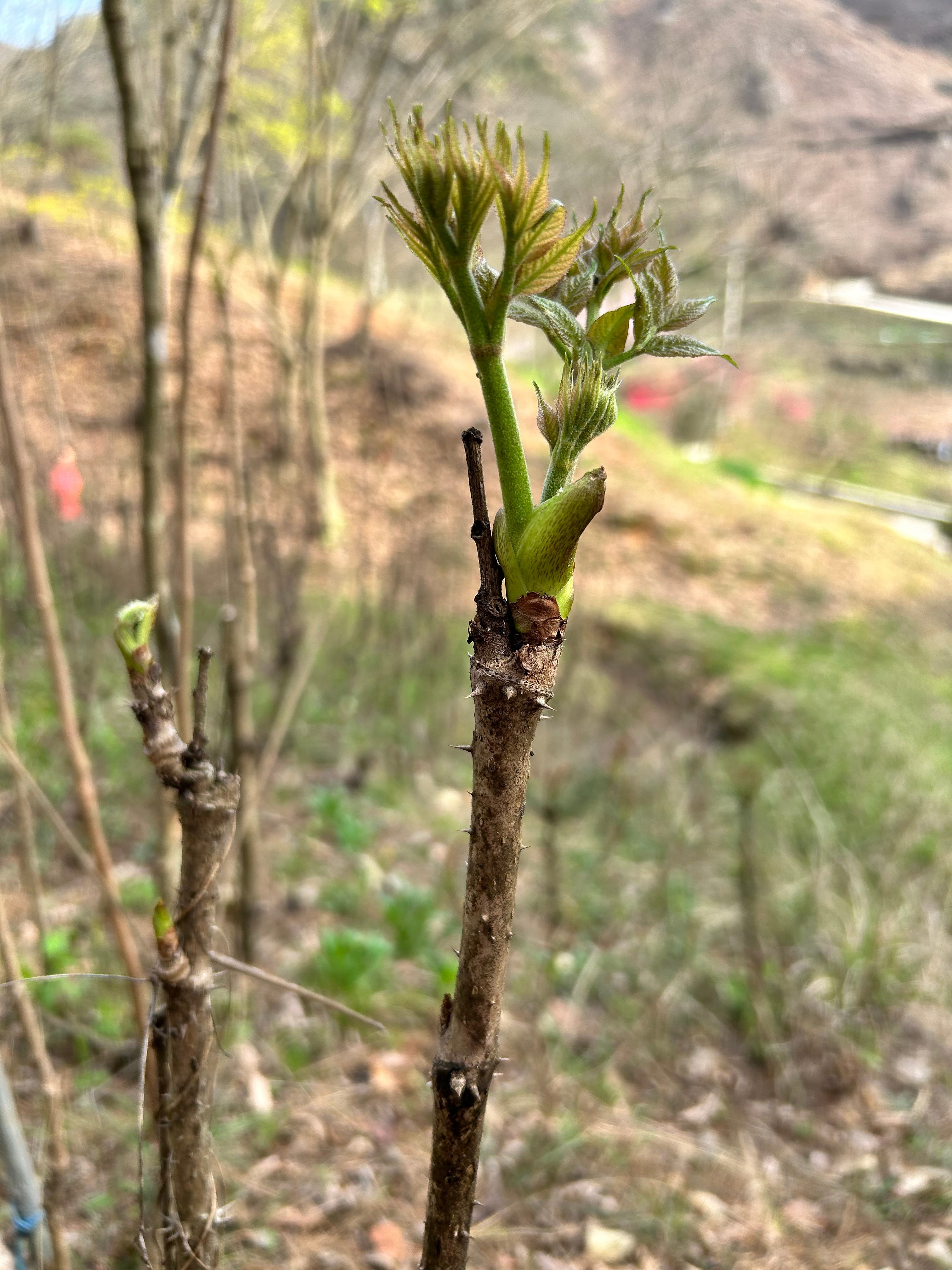
(Pictured: dureup shoots, watch out for the thorns!)
[1] Kim, Invisible, 1-2.
[2] Kim, Invisible, 152.
Oh, to have open hearts to welcome others and help them feel visible and valuable.